
Is Face Paint Safe for Children? A Parent’s Guide
Practical information about face painting.
Face painting is often one of the first activities children notice at a birthday party, festival or community event. For parents, however, the excitement may come with an important question:
Is face paint safe for my child’s skin?
Professional face painting is generally safe for most children when the artist uses products specifically manufactured for cosmetic use and follows appropriate hygiene practices. Not every product labeled “paint,” “washable” or even “non-toxic” belongs on a child’s face.
Here is what parents should know before their child sits in the artist’s chair.
Face Paint Should Be Made for Skin
The most important distinction is between cosmetic face paint and ordinary craft paint.
Professional face paints are cosmetics formulated for use on human skin. Craft products such as acrylic paint, tempera paint, markers and washable children’s paint are designed for paper, canvas or other surfaces.
A “non-toxic” label does not necessarily mean a product is appropriate for skin. Health guidance for face and body painting specifically warns that art supplies should not be used as cosmetics simply because they are labeled non-toxic.
A professional face painter should be able to tell you which brands are being used and confirm that the products are cosmetic-grade and intended for face or body application.
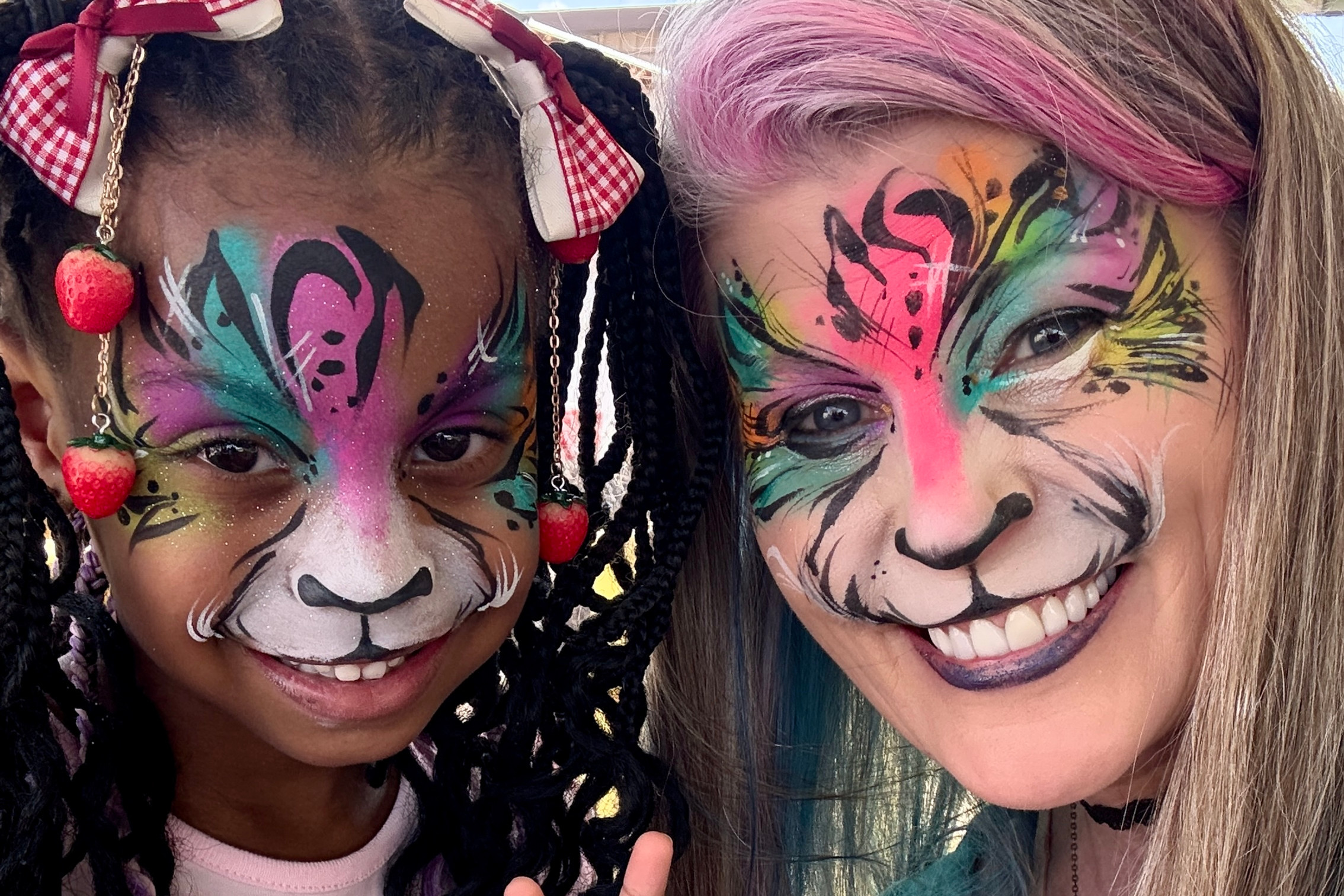
KatieDid Designz uses professional, cosmetic-grade, skin-safe products rather than craft paint or unverified novelty products.
Read the Product Label
Parents do not need to become cosmetic chemists, but a reputable face paint should have:
A manufacturer or brand name
An ingredient list
Directions for use
Appropriate warnings
Information about where the product may be applied
Instructions for removal
Be cautious about products with no packaging, incomplete labels or no identifiable manufacturer.
The U.S. Food and Drug Administration regulates cosmetics and the color additives used in them, but most cosmetic products are not individually approved by the FDA before being sold. That is one reason it is important to choose established professional products and use them according to the manufacturer’s instructions.
You may hear the terms “FDA-approved face paint” or “FDA-certified face paint.” Those phrases can be misleading. A more accurate question is whether the product is manufactured for cosmetic use and contains color additives permitted for its intended application.
Watch for Individual Sensitivities
Even a high-quality cosmetic can cause irritation in someone who is sensitive to a particular ingredient.
Tell the artist before painting if your child has:
Known cosmetic allergies
Extremely sensitive skin
Active eczema
A current rash
Open cuts or sores
A recent reaction to makeup or skincare products
A professional artist may decline to paint directly over irritated, injured or visibly infected skin. That is a safety decision, not poor customer service.
Some artists may offer an alternative, such as painting on the arm, applying an airbrush tattoo somewhere else on the body or providing a small design that avoids the affected area.
Consider a Patch Test
A patch test may be helpful for children with sensitive skin or a history of cosmetic reactions.
Place a small amount of the product on an inconspicuous area, such as the inside of the arm. Follow the product manufacturer’s instructions and watch for redness, itching, swelling or discomfort.
A quick test at the event cannot guarantee that a delayed reaction will not occur, but it may reveal an immediate sensitivity.
For children with significant allergies, chronic skin conditions or a history of serious reactions, ask their pediatrician or dermatologist before using cosmetic face paint.
Clean Tools Matter Too
Safe products are only part of the equation. The artist’s setup and hygiene practices also matter.
A professional painter should keep the work area organized and use clean supplies. Paints should be stored and handled in a way that reduces contamination. Guidance for face and body painting also recommends that cosmetic products and bulk supplies be handled hygienically.
An artist should not paint over cold sores, conjunctivitis, open wounds or other visibly contagious skin conditions. Professional codes of practice commonly recommend declining service in those circumstances.
Parents can also help by making sure the child’s face is reasonably clean before getting painted.
Age and Cooperation Matter
Many professional artists establish a minimum age for face painting. KatieDid Designz requires children to be at least three (3) years old.
Very young children may rub their eyes, put paint-covered hands in their mouths or become frightened when someone approaches their face with a brush. A child who is crying, pulling away or clearly does not want to participate should not be forced to be painted.
A small cheek, hand or arm design may be a better option for a hesitant child.
What Should You Ask a Face Painter?
Before booking, ask:
Do you use cosmetic-grade products made specifically for skin?
What brands do you use?
How do you clean and organize your equipment?
What is your policy regarding rashes, open wounds or illness?
Do you carry business liability insurance?
Do you have a portfolio of your work?
What happens if a child does not want to be painted?
A professional should be able to answer those questions without becoming defensive or dismissing your concerns.
Removing Face Paint Safely
Most water-activated professional face paints can be removed with mild soap, water and a soft washcloth.
Avoid aggressive scrubbing. If some pigment remains, gently cleanse the area again or use a skin-appropriate makeup remover. Temporary staining from highly pigmented colors may fade after additional washing.
Waterproof products require a different removal method, usually involving oil or an appropriate makeup remover. Always follow the artist’s or manufacturer’s instructions.
Stop using the product and wash the area if your child experiences burning, significant itching or discomfort. Seek medical guidance for swelling, difficulty breathing or a severe reaction.
Safe Face Painting Starts With the Right Artist
Parents should not have to choose between fun and safety.
A qualified professional understands that face painting involves more than artistic talent. It requires appropriate cosmetics, thoughtful hygiene, clear communication and the judgment to say no when painting would not be advisable.
KatieDid Designz provides professional face painting using cosmetic-grade, skin-safe products for parties, festivals, corporate events and community celebrations throughout Brazoria County and the Greater Houston area.
Planning an event? Contact KatieDid Designz to learn more about professional face painting and age-appropriate options for your guests.


